


SVGA Information
The Video Graphics Array (VGA)
standard was developed by IBM in 1987 and quickly became the dominant display
interface for personal computers. VGA supports 640x480 resolution at 16 colors,
a significant step forward at the time.
Super VGA (SVGA) was developed through the Video Electronics Standards Association (VESA) beginning in 1988, extending VGA with higher resolutions starting at 800x600 and greater color depths. VESA's BIOS Extension (VBE) became the standard, ensuring software compatibility across the many incompatible VGA extensions that had emerged, including the 8514/A superset and Extended Graphics Array (XGA).
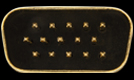
The HD15 connector (also known as DE-15) became the universal standard for analog video on PCs. This 15-pin High Density D-Sub connector, arranged in 3 rows of 5 pins, is used by virtually all VGA and SVGA cables and has been the primary analog video connector for decades.
Super VGA (SVGA) was developed through the Video Electronics Standards Association (VESA) beginning in 1988, extending VGA with higher resolutions starting at 800x600 and greater color depths. VESA's BIOS Extension (VBE) became the standard, ensuring software compatibility across the many incompatible VGA extensions that had emerged, including the 8514/A superset and Extended Graphics Array (XGA).
The HD15 connector (also known as DE-15) became the universal standard for analog video on PCs. This 15-pin High Density D-Sub connector, arranged in 3 rows of 5 pins, is used by virtually all VGA and SVGA cables and has been the primary analog video connector for decades.
Modern Context
VGA/SVGA is a legacy analog standard that is being phased out. Intel dropped VGA support from its chipsets in 2015, and most modern devices use HDMI or DisplayPort instead. However, VGA remains common on projectors, industrial equipment, KVM switches, and older monitors. VGA-to-HDMI active converters are available for connecting legacy equipment to modern displays.
The connection type commonly used for VGA and SVGA monitor cables today is a 15-pin
VESA DDC (PnP)
High Density D-Sub connector (HD15), which consists of 3 rows of 5 pins each, which
are thinner than the normal D-Sub connectors (DB). Macintosh monitors, however,
require a DB15 connector, wherein the 15-pin layout is organized in only 2 rows.
Following are the pin assignments for today's monitor cables:
VGA / SVGA
(HD15) Plug
| Pin # | HD15 VESA DDC (PnP) |
|---|---|
| 1 | Red |
| 2 | Green / Mono |
| 3 | Blue |
| 4 | Reserved |
| 5 | Ground |
| 6 | Red Ground |
| 7 | Green / Mono Ground |
| 8 | Blue Ground |
| 9 | +5V DC |
| 10 | Sync Ground |
| 11 | ID Bit 0 |
| 12 | DDC Serial Data |
| 13 | Horizontal or Comp. Sync |
| 14 | Vertical Sync |
| 15 | DDC Serial Clock |
* ID Bits optionally input to the computer
* Serial Clock and Data Lines are bi-directional
| Side A | Cable / Adapter | Side B |
|---|---|---|
|
SVGA Cable | |
|
SVGA Male to SVGA Female | 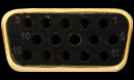 |
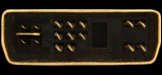 |
DVI-A to SVGA | |
| Side A | Cable / Adapter | Side B |
|---|---|---|
|
DVI-A Male to SVGA Female | |
|
SVGA Male to SVGA Male | |
|
SVGA Male to SVGA Female | |
|
SVGA Female to SVGA Female | |
Last updated: