


DVI-A Information
DVI, or Digital Visual Interface Technology, was introduced in 1999 following the
formation of the
Digital Display Working
Group (DDWG) in 1998. The DDWG's goal was to create a universal digital
video interface standard for connecting PCs to
VGA monitors.
DVI-A (DVI-Analog) carries only analog video signals, making it functionally similar to VGA/SVGA. The DVI-A connector has 17 pins and uses 4 analog pins surrounding the long flat pin to transmit Red, Green, Blue, and sync signals.
Because both DVI-A and SVGA are analog signal types, conversion between the two is straightforward. Inexpensive passive adapters and cables are widely available to convert SVGA to DVI-A or DVI-A to SVGA without any signal processing required.
A DVI-A connector will not work plugged into a female DVI-D connector, because DVI-D has no analog pins. It mates only with a female DVI-I receptacle (which includes the analog pins). DVI-A cables and adapters are single-link only, but they work in both single-link and dual-link DVI-I connections.
DVI-A (DVI-Analog) carries only analog video signals, making it functionally similar to VGA/SVGA. The DVI-A connector has 17 pins and uses 4 analog pins surrounding the long flat pin to transmit Red, Green, Blue, and sync signals.
Because both DVI-A and SVGA are analog signal types, conversion between the two is straightforward. Inexpensive passive adapters and cables are widely available to convert SVGA to DVI-A or DVI-A to SVGA without any signal processing required.
A DVI-A connector will not work plugged into a female DVI-D connector, because DVI-D has no analog pins. It mates only with a female DVI-I receptacle (which includes the analog pins). DVI-A cables and adapters are single-link only, but they work in both single-link and dual-link DVI-I connections.
Modern Context
DVI-A is largely obsolete today, having been replaced by DVI-D, HDMI, and DisplayPort for modern video connections. For analog connections, VGA/SVGA remains far more common than DVI-A. DVI-A ports are rarely found on current hardware, so users needing analog connectivity will typically encounter standard VGA connectors instead.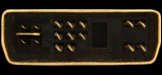
| Side A | Cable / Adapter | Side B |
|---|---|---|
|
DVI-A to DVI-A | |
|
DVI-A to SVGA | 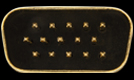 |
|
DVI-A to M1 Analog/P&D Analog |  |
| Side A | Cable / Adapter | Side B |
|---|---|---|
|
DVI-A Male to SVGA Female |  |
|
DVI-A to DFP Female |  |
|
DVI-A to M1 Analog/P&D Analog | |
Last updated: