


DVI-I Information
DVI, or Digital Visual Interface Technology, was introduced in 1999 following the
formation of the
Digital Display Working
Group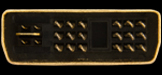 (DDWG) in 1998. The DDWG's goal was to create a universal digital video interface
standard for connecting PCs to
VGA monitors.
(DDWG) in 1998. The DDWG's goal was to create a universal digital video interface
standard for connecting PCs to
VGA monitors.
 DVI-I
(DVI-Integrated) carries both digital and analog signals within a single connector,
making it the most versatile DVI type. However, it is important to understand that
a DVI-I cable cannot bridge a digital output to an analog
input or vice versa through the cable alone -- a signal converter is required for
cross-format connections.
DVI-I
(DVI-Integrated) carries both digital and analog signals within a single connector,
making it the most versatile DVI type. However, it is important to understand that
a DVI-I cable cannot bridge a digital output to an analog
input or vice versa through the cable alone -- a signal converter is required for
cross-format connections.
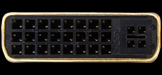
A DVI-I port is compatible with all DVI connector types: DVI-D (digital only), DVI-A (analog only), and DVI-I cables. It can also connect to VGA/SVGA devices using a simple passive adapter for analog signals.
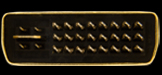
DVI-I is available in two link configurations. Single Link (23 pins) supports a TMDS clock rate of 25-165 MHz. Dual Link (29 pins) doubles the bandwidth to 330 MHz and is backwards compatible with Single Link. If you are unsure which type you need, Dual Link will work in all cases where Single Link may not. To determine your required bandwidth, multiply your desired resolution by refresh rate (e.g., 1600x1200 x 70 = 134 MHz).
(DDWG) in 1998. The DDWG's goal was to create a universal digital video interface
standard for connecting PCs to
VGA monitors.DVI-I
(DVI-Integrated) carries both digital and analog signals within a single connector,
making it the most versatile DVI type. However, it is important to understand that
a DVI-I cable cannot bridge a digital output to an analog
input or vice versa through the cable alone -- a signal converter is required for
cross-format connections.A DVI-I port is compatible with all DVI connector types: DVI-D (digital only), DVI-A (analog only), and DVI-I cables. It can also connect to VGA/SVGA devices using a simple passive adapter for analog signals.
DVI-I is available in two link configurations. Single Link (23 pins) supports a TMDS clock rate of 25-165 MHz. Dual Link (29 pins) doubles the bandwidth to 330 MHz and is backwards compatible with Single Link. If you are unsure which type you need, Dual Link will work in all cases where Single Link may not. To determine your required bandwidth, multiply your desired resolution by refresh rate (e.g., 1600x1200 x 70 = 134 MHz).
Modern Context
DVI-I was the most versatile DVI connector type, but it is being phased out of modern hardware. Most current graphics cards have dropped DVI-I in favor of HDMI and DisplayPort. Where DVI-I is still present, it remains useful because a simple passive adapter can connect to VGA monitors for analog output, or to HDMI devices for digital output.| Side A | Cable / Adapter | Side B |
|---|---|---|
|
DVI-I Single Link Cable | |
 |
DVI-I Dual Link Cable | |
| Side A | Cable / Adapter | Side B |
|---|---|---|
 |
DVI-I Female to DVI-D Male | 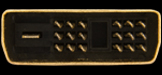 |
Last updated: